
Paris, Looking Closer
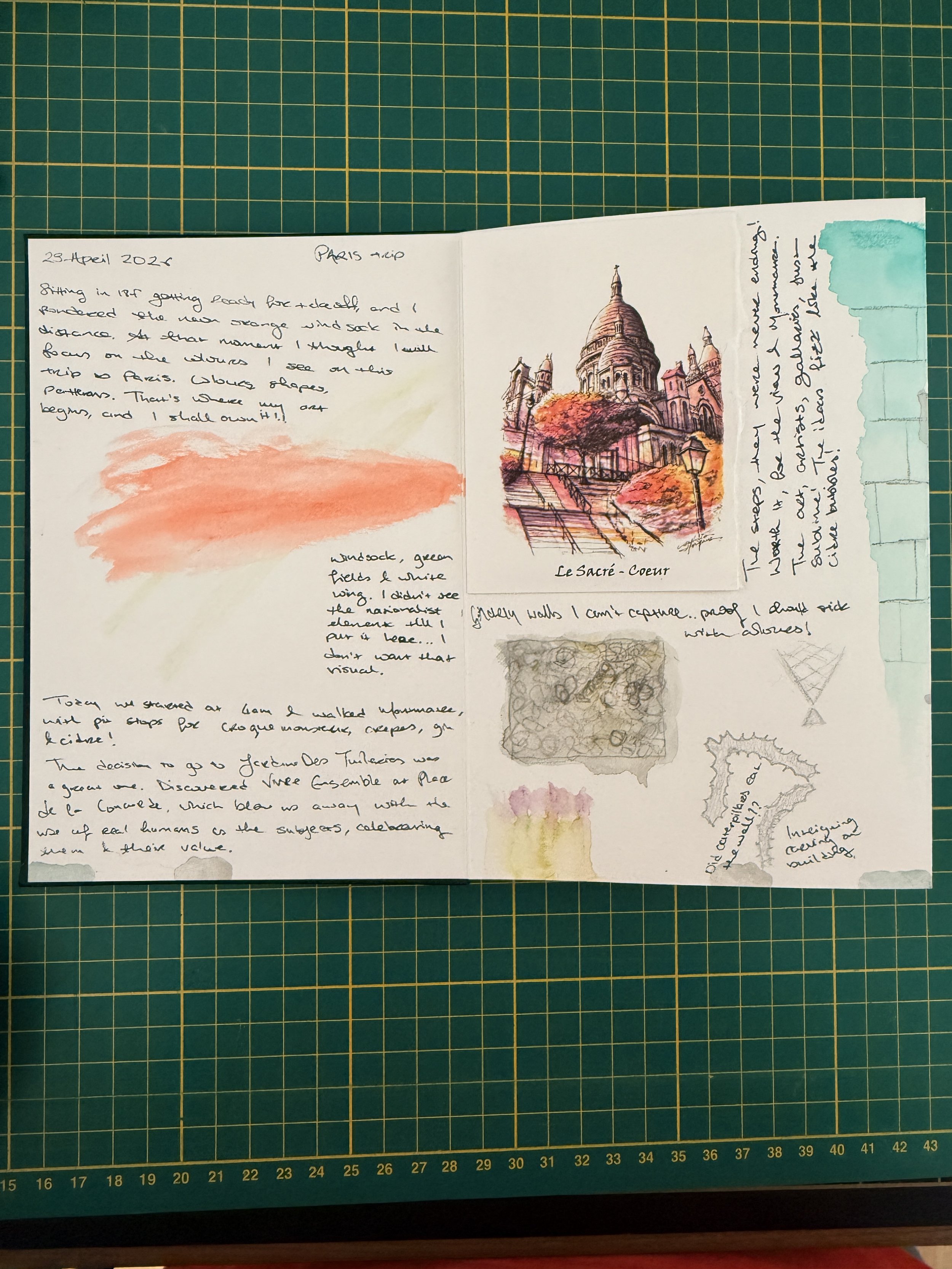
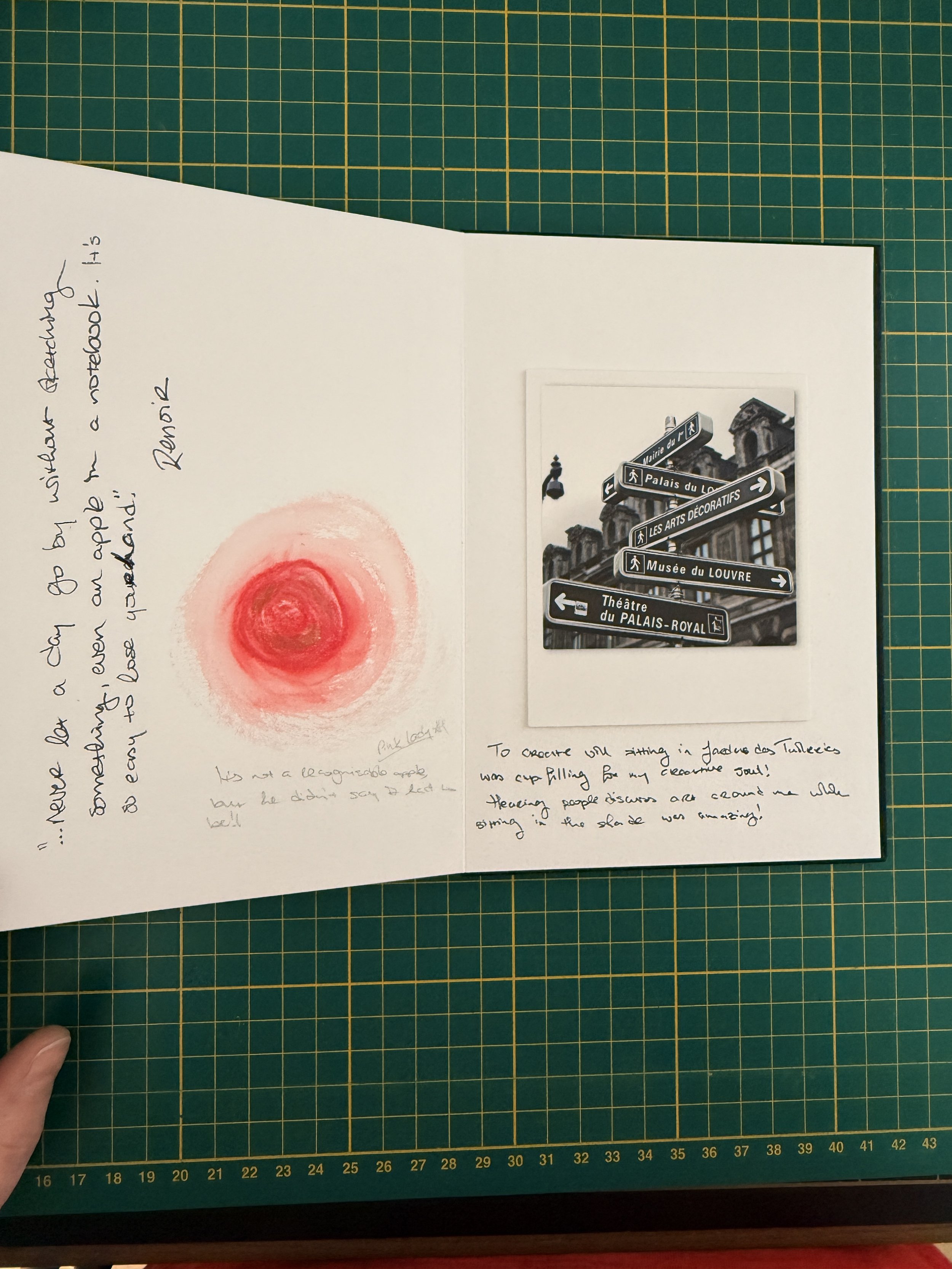
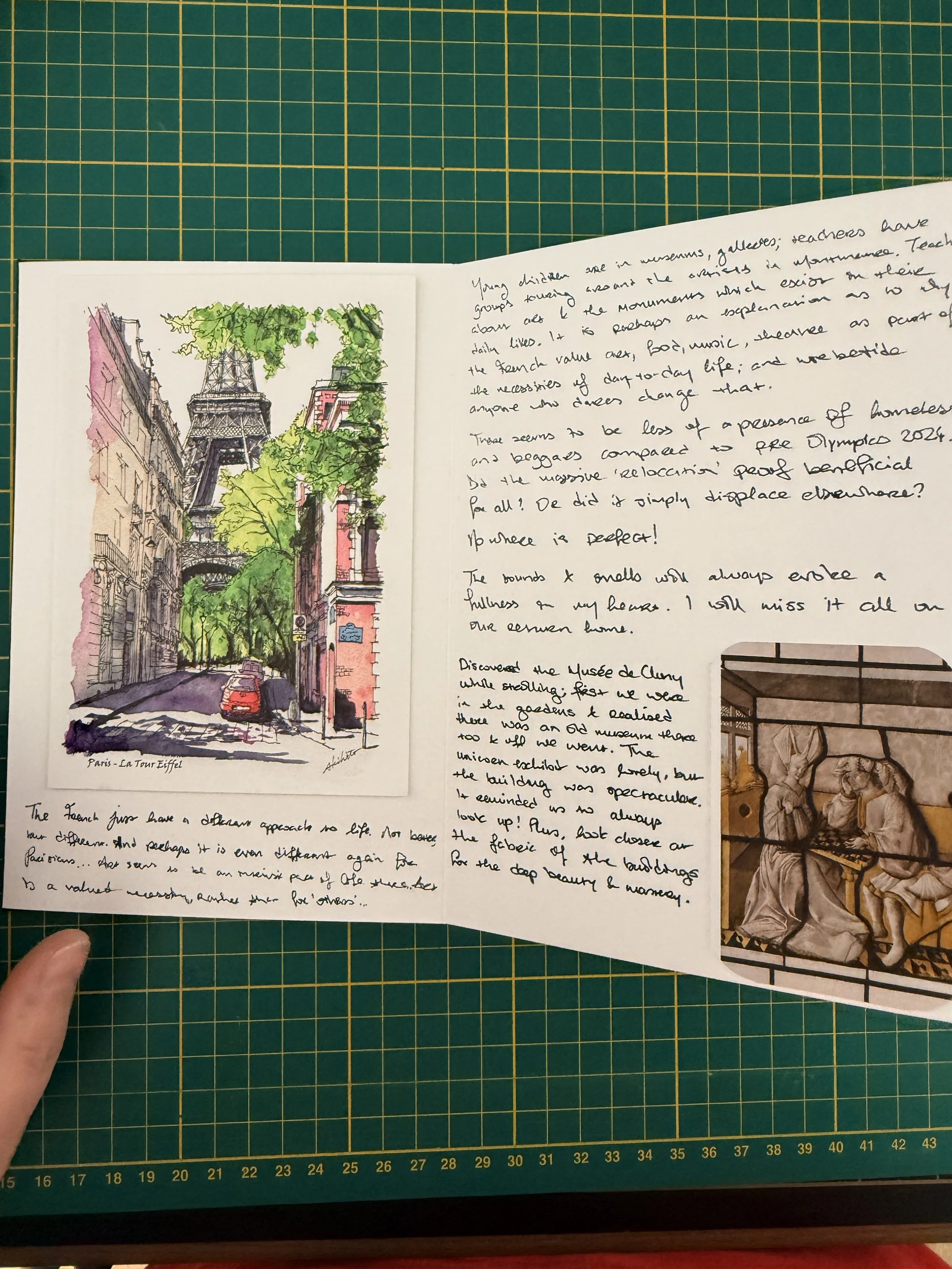
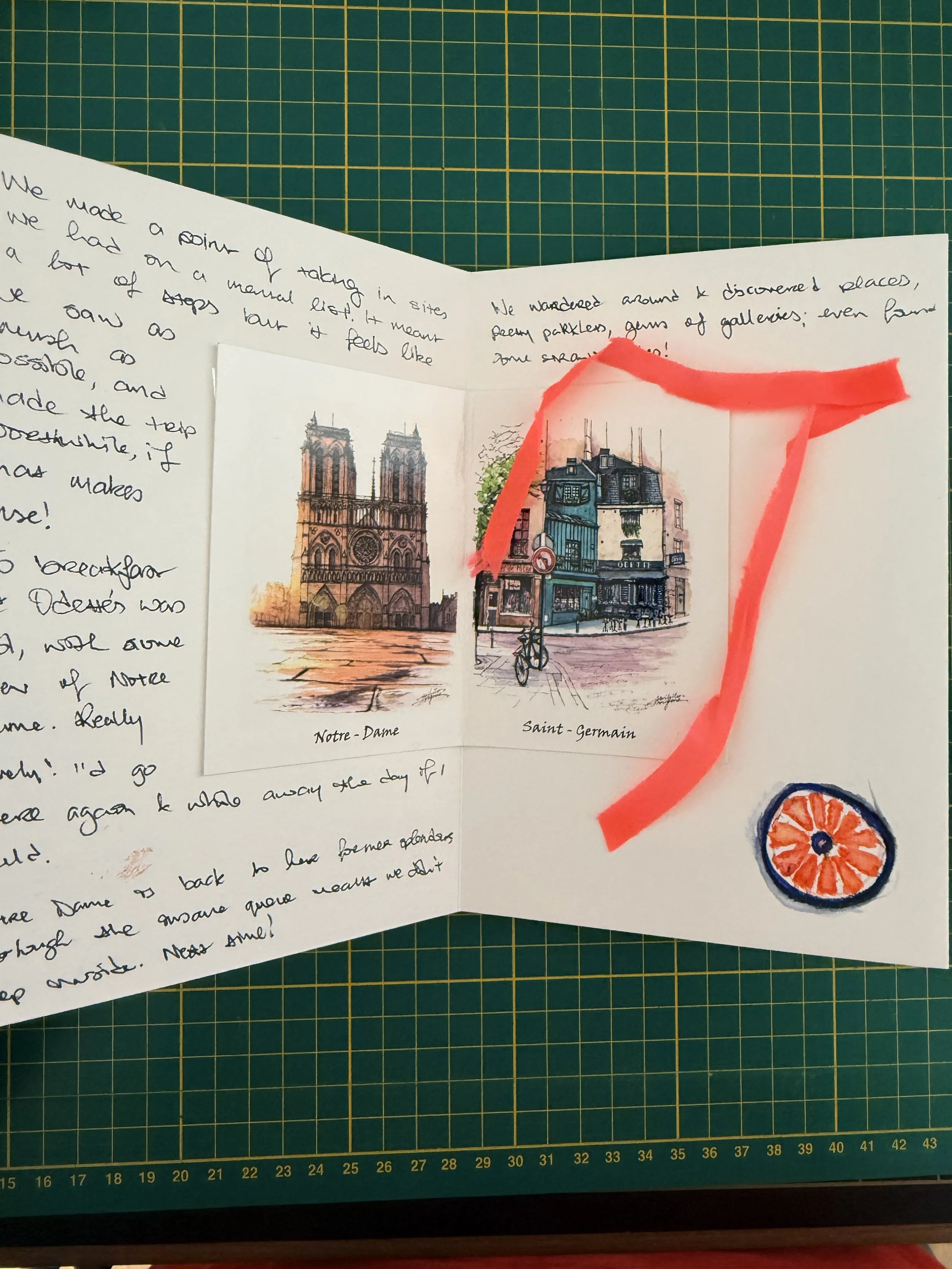
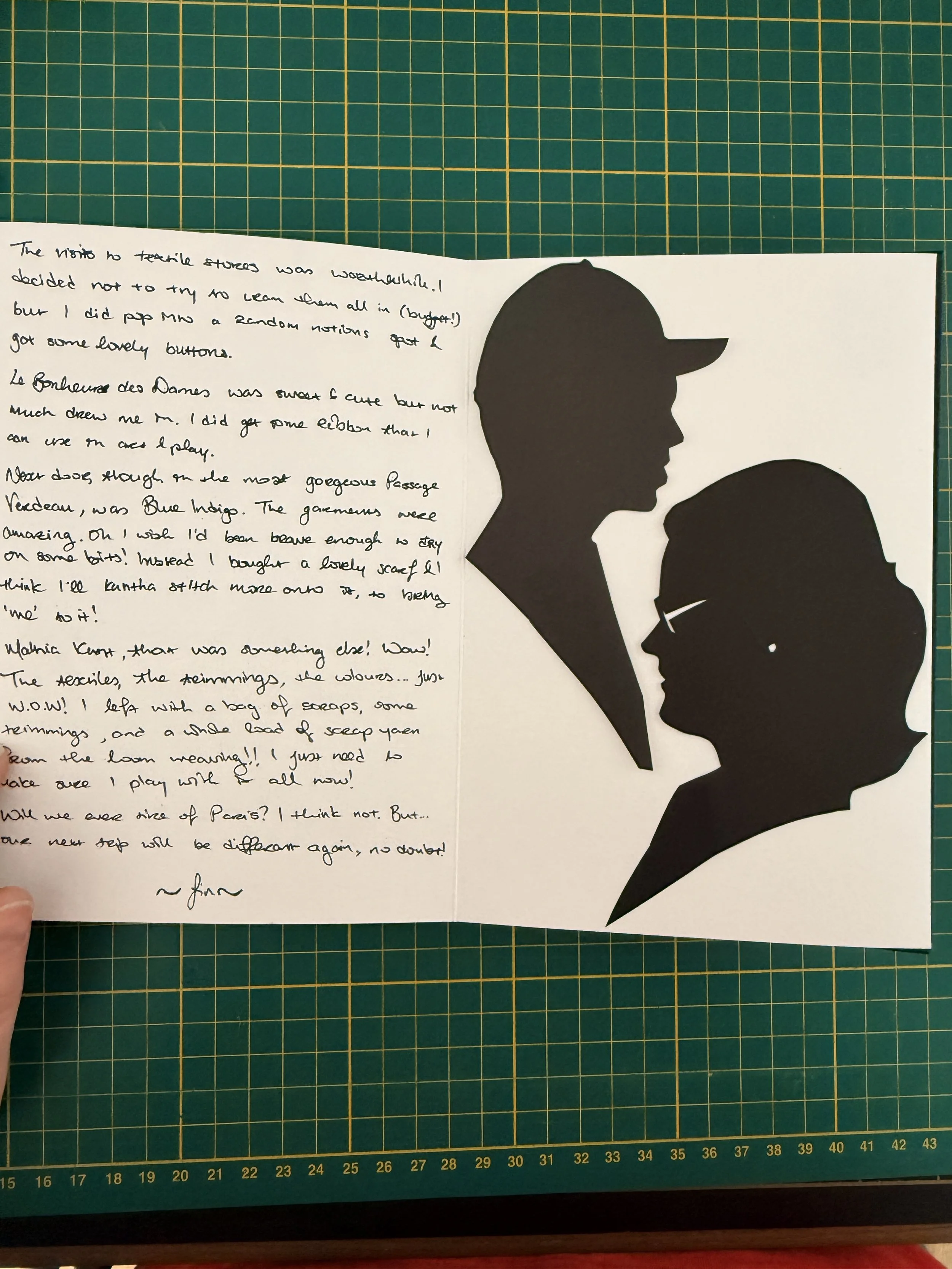
Earlier this year, I packed a small Meeden accordian sketch book, a handful of Caran d'Ache water-soluble wax pastels, a pencil, a pen, and some water brushes before heading to Paris.
I thought I was bringing materials to record what I saw. Instead, they changed how I looked.
With a small sketchbook in my bag, I found myself paying attention to things I would normally walk past. The patterns in stonework. The textures of old walls. The way copper staining ran down facades in verdigris; soft greens and blues. Unexpected colour combinations in doorways, pavements, shop fronts, and street corners.
The journal became less about documenting Paris and more about noticing it.
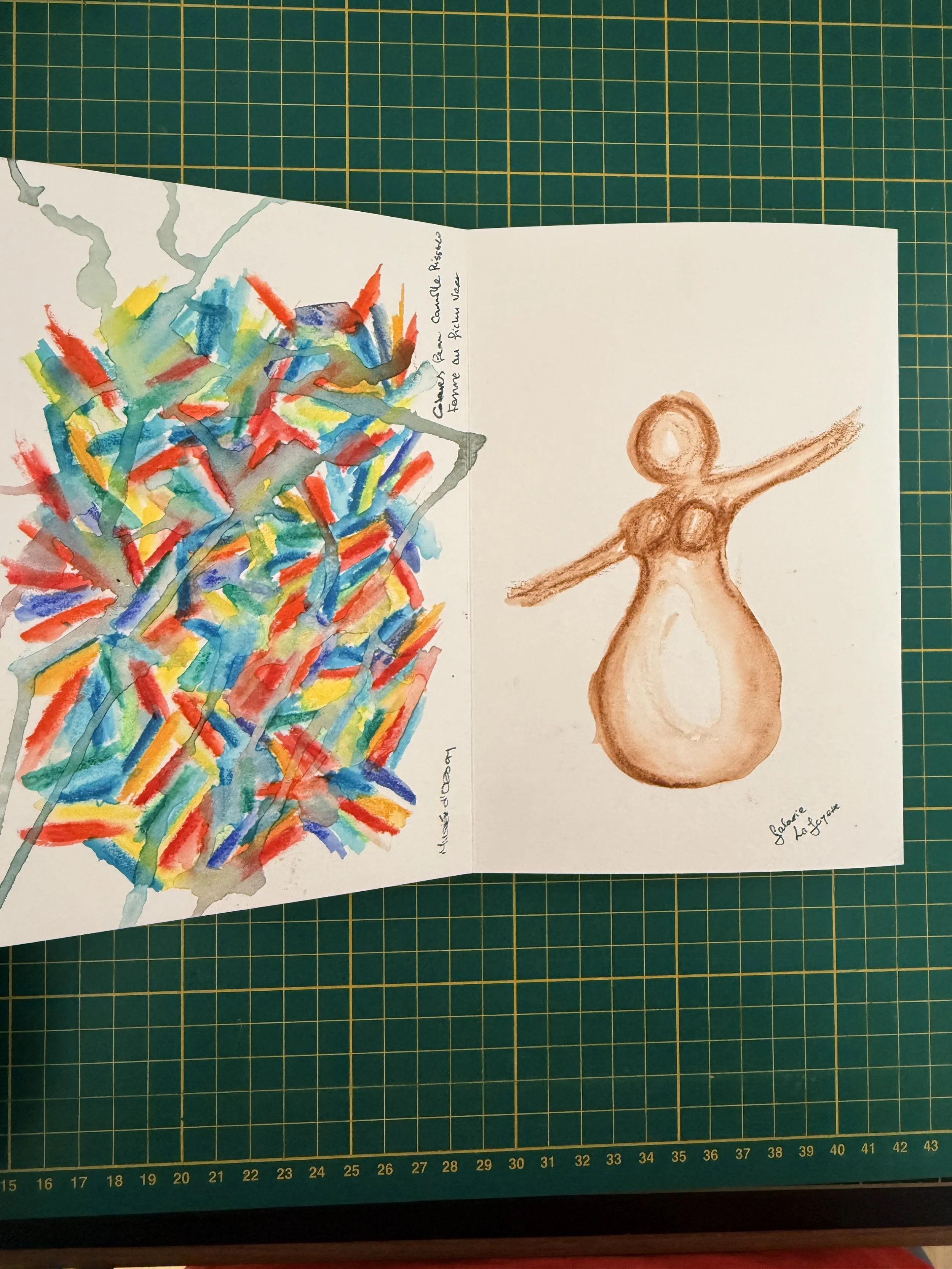
At the Musée d'Orsay, I realised something else was happening. Standing in front of works by artists we all know as greats, I found myself increasingly interested not in the paintings as a whole, but in the colours that built them. Rather than photographing entire artworks, I was taking close-up images of colour relationships, marks, and fragments.
That shift felt surprisingly freeing.
Instead of thinking, "There’s no way I could make something like this", I was asking, "Why does that colour beside that one feel so alive?"
I wasn't collecting masterpieces. I was collecting observations. And those observations found their way into the pages of the journal.
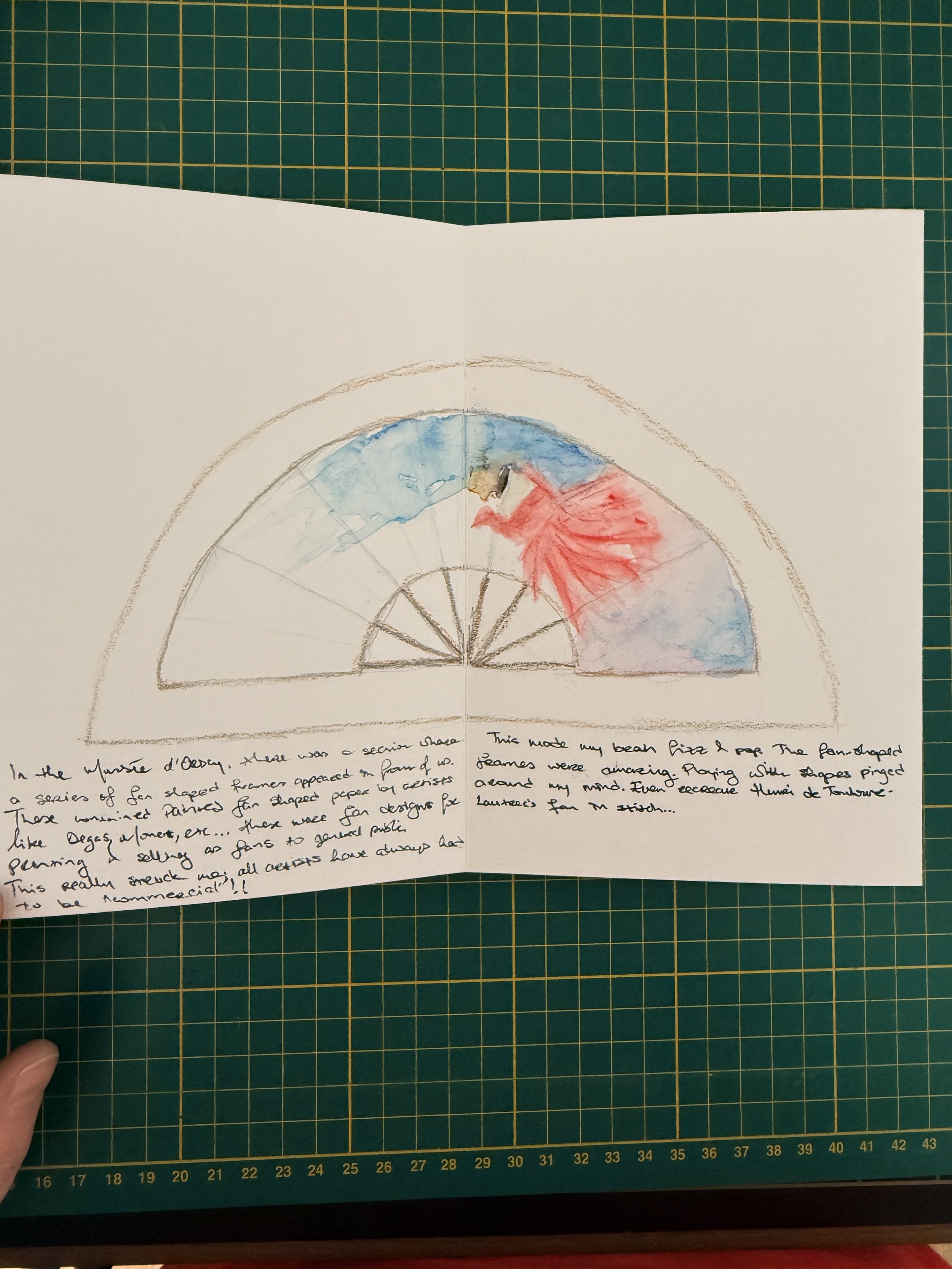
One unexpected moment from the Musée d'Orsay changed how I think about art, commerce, and my own practice. I'll share that story next.
Ax
